





OFFICIAL PUBLICATION OF THE VIRGINIA ASSOCIATION OF COMMUNITY BANKS

2026 Pub. 15 Issue 1

Value-Based Selling in Financial Services

What Top Performers Do

You may have heard the term value-based selling, but you may not know what it is or what it entails. Value-based selling in financial services is an approach that places your clients and their financial concerns and challenges at the forefront. It doesn’t communicate what you do, but the worth of what you do. Value selling in financial services is a differentiator because, when done well, it builds trust, enabling salespeople to guide customers through some of their most important financial matters, such as buying a home or investing for retirement.

Value-based selling is client-centered. Once you master your value-based selling approach, you’ll know who to help and how your help will benefit them. Value-based selling will also provide insight into why your prospects and clients want and need your products, services and advice.

Value-Based Selling is Based on Motivation

In your role as a financial services salesperson, most of your customers will need to make a change, and change is difficult. The stats for diet and exercise are proof of that. But unfortunately, most of the things people are supposed to do, they don’t do.

Value selling in financial services is no different. Change isn’t easy for those you meet and advise. The equation for change has two components pulling in different directions: escaping how things are now and resisting change itself. Value-based selling requires motivating your client to change. Perhaps you must also be motivated to change your approach.

The Importance of Value-Based Selling

Inevitably, customers will have some reservations about a product or service. That’s why a good value-based selling approach will, first and foremost, center on them and cater to their needs. Secondary to that is demonstrating your company’s value and nurturing them through the sales process. The measure of value you provide depends on your client. You can offer the same solution to two different people and get two different reactions.

For example, let’s say you’re talking to a prospect about an inheritance they just received. Your prospect may or may not tell you everything you need to advise them on their best choices. Based on your questioning and listening skills, you must gather everything that is most important to them regarding that asset. It could be the return on interest rates, safety or liquidity. You should understand how that asset relates to their other savings and investments.

Once you discern their needs and goals for this money, you can make a value-based recommendation. You can suggest a product that is an appropriate solution, then begin discussing why they should work with you and your financial firm. Too often, that is where salespeople start the sales conversation: with their solutions. As a value-based seller, start with the prospect or customer, peel back the onion to understand their goals, then make a recommendation. The most important aspect of value selling is helping the customer find the best solution for them. If you do that, you will earn their business nine times out of 10.

Value-based selling is the proven path to becoming your customer’s trusted advisor. Your greatest value is often revealed by the depth and breadth of the questions you ask to fully understand your customers’ business challenges. A value-based seller is always curious about their customers and strives to be additive in every interaction — not just with a product offering, but with another resource, a story or even a piece of humor.

Tips on How to Perform Value-Based Selling 

Now that you know what value-based selling is and its importance, let’s get into value-based selling tips.

Focus on Giving, Not Selling
The most crucial principle of the value-based selling approach is to give to your clients, not take or sell. The book “Go-Givers Sell More” states that, unlike other methodologies, value-based selling isn’t about what you’re selling; it’s about what the client wants and how you can help them achieve their goals. To quote a well-known saying: “It’s about the journey, not the destination.” Value-based selling in financial services is a relationship-building process and, by nature, often very personal. Part of your value-add is the time and care you take in providing your advice and solutions.

Lend a Listening Ear
When someone asks you a question, it’s never a good feeling when they interrupt you, going off to the races with their own comments and stories before you’ve even finished answering. Unfortunately, financial services salespeople are often guilty of doing just that. Such a salesperson might ask, “What do you plan to use these funds for?” and then immediately begin recommending product solutions rather than asking follow-up questions.

Using a value-based sales approach, you will dive deeper into discovery and become adept at asking good questions and listening first. Skilled salespeople know that they can learn everything in the process of asking and listening, and this is what builds trust. See how many questions you can ask before proposing a solution. It will become easier with practice.

Get to Know Your Client
In the world of financial services sales, every client is different. You should use the early period to learn as much as possible about them. Getting to know someone and sharing examples of what has worked for similar clients will help you build credibility with your new clients. What do you bring to the table for your prospect that no one else does? Surely your product can be found elsewhere, but you can spotlight your value by uncovering the issues and solving similar business challenges.

Follow Through With Consistency
Value selling in financial services is not easy. Becoming masterful takes a lot of consistent focus, work and insights to execute properly. We know from thousands of evaluations that elite salespeople use a consistent sales approach because it works. Strong value-based salespeople really care just as much about the benefits the customer receives as they do. 

Conclusion

A value-based selling strategy is key to improving your sales plan and results. This approach can earn you the position of business advisor and help you build strong, beneficial long-term relationships.
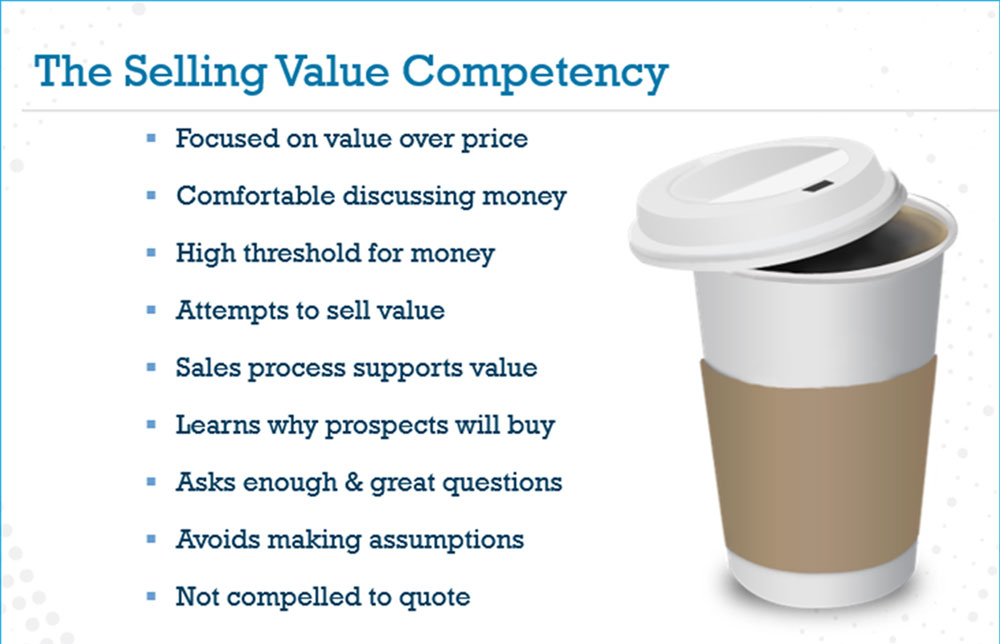
The above are the competencies of value-based selling from our partner, Objective Management Group, the industry-leading provider of sales evaluations.


Value-Based Selling in Financial Services

What Top Performers Do

Value-Based Selling in Financial Services

What Top Performers Do

You may have heard the term value-based selling, but you may not know what it is or what it entails. Value-based selling in financial services is an approach that places your clients and their financial concerns and challenges at the forefront. It doesn’t communicate what you do, but the worth of what you do. Value selling in financial services is a differentiator because, when done well, it builds trust, enabling salespeople to guide customers through some of their most important financial matters, such as buying a home or investing for retirement.

Value-based selling is client-centered. Once you master your value-based selling approach, you’ll know who to help and how your help will benefit them. Value-based selling will also provide insight into why your prospects and clients want and need your products, services and advice.

Value-Based Selling is Based on Motivation

In your role as a financial services salesperson, most of your customers will need to make a change, and change is difficult. The stats for diet and exercise are proof of that. But unfortunately, most of the things people are supposed to do, they don’t do.

Value selling in financial services is no different. Change isn’t easy for those you meet and advise. The equation for change has two components pulling in different directions: escaping how things are now and resisting change itself. Value-based selling requires motivating your client to change. Perhaps you must also be motivated to change your approach.

The Importance of Value-Based Selling

Inevitably, customers will have some reservations about a product or service. That’s why a good value-based selling approach will, first and foremost, center on them and cater to their needs. Secondary to that is demonstrating your company’s value and nurturing them through the sales process. The measure of value you provide depends on your client. You can offer the same solution to two different people and get two different reactions.

For example, let’s say you’re talking to a prospect about an inheritance they just received. Your prospect may or may not tell you everything you need to advise them on their best choices. Based on your questioning and listening skills, you must gather everything that is most important to them regarding that asset. It could be the return on interest rates, safety or liquidity. You should understand how that asset relates to their other savings and investments.

Once you discern their needs and goals for this money, you can make a value-based recommendation. You can suggest a product that is an appropriate solution, then begin discussing why they should work with you and your financial firm. Too often, that is where salespeople start the sales conversation: with their solutions. As a value-based seller, start with the prospect or customer, peel back the onion to understand their goals, then make a recommendation. The most important aspect of value selling is helping the customer find the best solution for them. If you do that, you will earn their business nine times out of 10.

Value-based selling is the proven path to becoming your customer’s trusted advisor. Your greatest value is often revealed by the depth and breadth of the questions you ask to fully understand your customers’ business challenges. A value-based seller is always curious about their customers and strives to be additive in every interaction — not just with a product offering, but with another resource, a story or even a piece of humor.

Tips on How to Perform Value-Based Selling 

Now that you know what value-based selling is and its importance, let’s get into value-based selling tips.

Focus on Giving, Not Selling
The most crucial principle of the value-based selling approach is to give to your clients, not take or sell. The book “Go-Givers Sell More” states that, unlike other methodologies, value-based selling isn’t about what you’re selling; it’s about what the client wants and how you can help them achieve their goals. To quote a well-known saying: “It’s about the journey, not the destination.” Value-based selling in financial services is a relationship-building process and, by nature, often very personal. Part of your value-add is the time and care you take in providing your advice and solutions.

Lend a Listening Ear
When someone asks you a question, it’s never a good feeling when they interrupt you, going off to the races with their own comments and stories before you’ve even finished answering. Unfortunately, financial services salespeople are often guilty of doing just that. Such a salesperson might ask, “What do you plan to use these funds for?” and then immediately begin recommending product solutions rather than asking follow-up questions.

Using a value-based sales approach, you will dive deeper into discovery and become adept at asking good questions and listening first. Skilled salespeople know that they can learn everything in the process of asking and listening, and this is what builds trust. See how many questions you can ask before proposing a solution. It will become easier with practice.

Get to Know Your Client
In the world of financial services sales, every client is different. You should use the early period to learn as much as possible about them. Getting to know someone and sharing examples of what has worked for similar clients will help you build credibility with your new clients. What do you bring to the table for your prospect that no one else does? Surely your product can be found elsewhere, but you can spotlight your value by uncovering the issues and solving similar business challenges.

Follow Through With Consistency
Value selling in financial services is not easy. Becoming masterful takes a lot of consistent focus, work and insights to execute properly. We know from thousands of evaluations that elite salespeople use a consistent sales approach because it works. Strong value-based salespeople really care just as much about the benefits the customer receives as they do. 

Conclusion

A value-based selling strategy is key to improving your sales plan and results. This approach can earn you the position of business advisor and help you build strong, beneficial long-term relationships.

The above are the competencies of value-based selling from our partner, Objective Management Group, the industry-leading provider of sales evaluations.